HU
HU
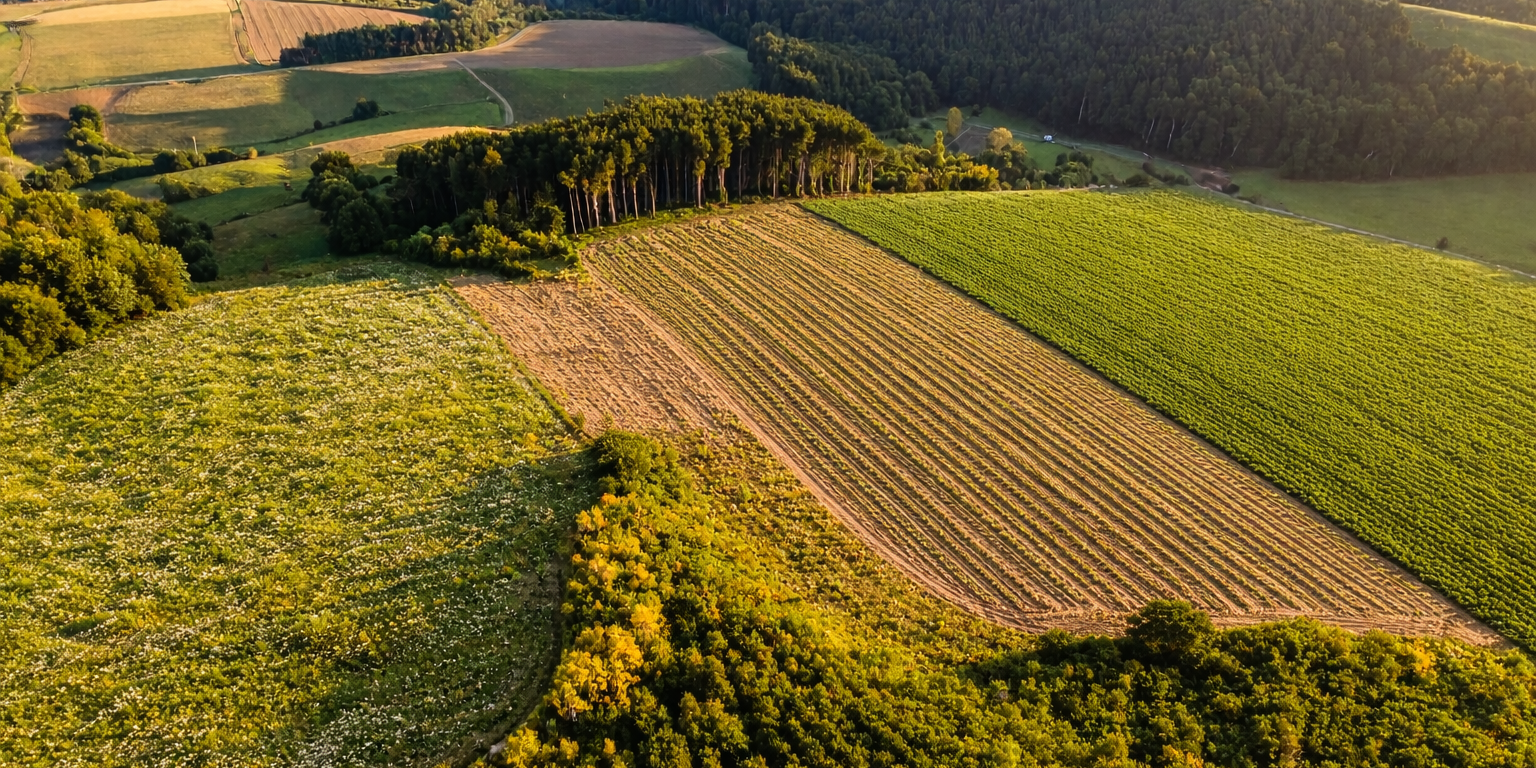
The international research project Regenomics, coordinated by Wageningen University & Research (WUR), has been successfully completed. The project examined the economic and environmental impacts of transitioning to regenerative agricultural practices in European farms. Regenerative agriculture focuses on improving and restoring soil health, increasing soil organic matter content, and enhancing carbon sequestration. Experts from the Institute of Agricultural Economics (AKI), Hungary also actively contributed to the research.
The primary objective of the project was to quantify how changes such as reducing the use of pesticides and mineral fertilizers, diversifying crop rotations, or adopting other regenerative practices affect farm profitability and environmental performance.
Calculations were carried out using data from 10 farms each in Hungary, Germany, France, and Poland. The results clearly demonstrated that there is no universal solution applicable to all farms.
For two farms in each country – eight farms in total – in-depth modelling was conducted based on two transition scenarios:
- A moderate, short-term scenario, assuming less ambitious reductions in chemical inputs and the adoption of minimum tillage practices.
- A long-term, more transformative scenario, assuming more ambitious reductions in chemical inputs and the adoption of no-tillage systems.
The findings suggest that the more moderate transition pathway may be economically viable in many cases. However, decisions and implementation strategies depend strongly on the specific characteristics and conditions of each individual farm.
The modelling also revealed that several implementation practices that appear straightforward in theory may entail more complex effects in practice. Consequently, the transition to regenerative agriculture cannot follow a standardised template but requires farm-specific, carefully designed planning.
Model results were also reviewed by key stakeholder groups. Farmers indicated that the Regenomics model can support a more precise assessment of the risks and opportunities associated with transition. From the perspective of landowners, this new approach provides a stronger basis for the long-term economic valuation and sustainable use of land as a production factor. Representatives of the trade sector highlighted that diversified, soil-centred production systems can lead to more predictable and balanced raw material supply, thereby contributing to the stability and resilience of food supply chains.
Why is this important for Hungary? One of the most important messages of the research is that the economic and environmental benefits of regenerative agriculture are highly region- and farm-specific. This is particularly relevant for Hungary, where natural conditions, water availability, and farm structures differ significantly from those of other EU regions.
AKI’s participation ensured that Hungarian experiences were incorporated into the international analysis, enabling domestic policymakers and farmers to assess transition opportunities based on more robust and evidence-based information in the future.
The full scientific report of the project is available here: Regenomics: Evaluating the economic and environmental impacts of regenerative agriculture: Modelling the economic and environmental trade-offs of regenerative agriculture using a framework-based approach.