HU
HU
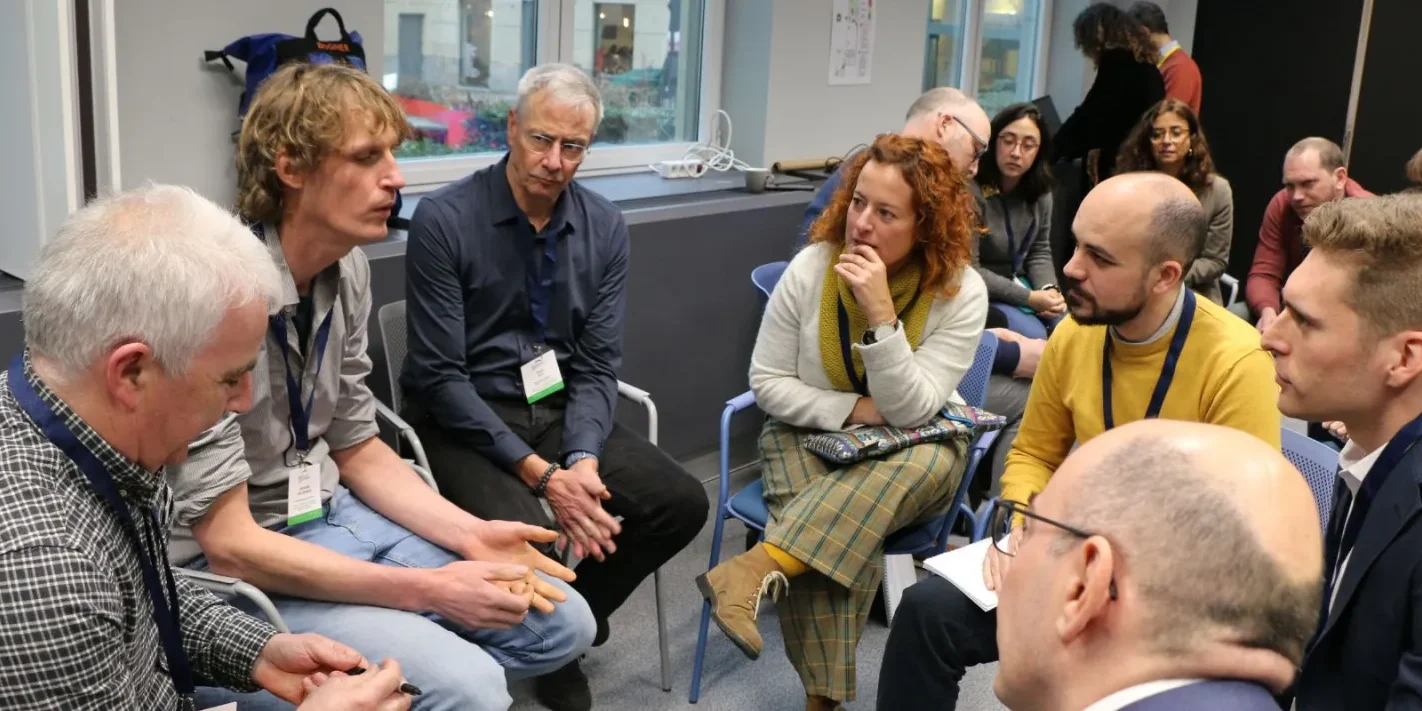
The first meeting of the Thematic Group on the CAP’s role in supporting sustainable and competitive livestock farming, operating under the EU CAP Network, took place in Brussels on 29 January. The objective of the expert group is to explore how the Common Agricultural Policy (CAP) can contribute to strengthening livestock systems that are both environmentally sustainable and economically competitive, while also providing professional input for the effective implementation of the CAP. Around 30 experts from various EU Member States participated in the one-day meeting, including farmers, researchers, advisors, and representatives of managing authorities. The Institute of Agricultural Economics (AKI) was represented by researcher Éva Vőneki.
The meeting aimed to facilitate the exchange of Member State experiences, identify the key environmental, economic and social sustainability challenges, and collect good practices and potential policy solutions applicable within the CAP framework. In the first part of the day, representatives of the EU CAP Network and the European Commission’s Directorate-General for Agriculture and Rural Development (DG AGRI) provided an overview of the state of the EU livestock sector. They highlighted the need to mitigate environmental and climate impacts, improve nutrient management and circular solutions, and promote the development of production models that are viable in the long term.
This was followed by presentations of several Member State examples illustrating different approaches to sustainable livestock production. The good practices included, among others, silvopastoral (tree-based grazing) systems, organic dairy production, extensive mountain farming, and solutions to improve the sustainability of intensive pig and poultry production.
The second part of the programme consisted of interactive small-group discussions, during which participants jointly analysed the main sustainability challenges and possible responses. The discussions examined the specific characteristics of intensive, extensive, and mixed livestock systems. For extensive systems, the focus was on ensuring economic viability, preventing land abandonment, and maintaining areas of high natural value. In the case of intensive systems, reducing environmental pressures, applying innovative technologies, and improving efficient nutrient management emerged as key priorities, while for mixed systems the importance of integrated and flexible solutions adapted to local conditions was emphasised.
In summarising the results of the group work, broad agreement emerged that the current CAP toolbox provides a solid basis for supporting sustainable livestock production. At the same time, there is a need for more targeted implementation of interventions, reduced administrative burdens, and further strengthening of knowledge exchange and cooperation.
The work of the thematic group will continue in April at the meeting in Lisbon.